How to quit vaping in NZ: a step-by-step guide (2026)
Updated 21 July 2026 · Written by the Inhalace team, Waiuku, Auckland · Every statistic below links to its source.
The short answer: to quit vaping in New Zealand, 1) set a quit date within the next two weeks, 2) call Quitline free on 0800 778 778 (nearly 16,000 Kiwis used it last year, and about 4,000 enrolled specifically to quit vaping), 3) ask your GP or pharmacist whether nicotine replacement (patches, gum, lozenges) makes sense for you, 4) replace the hand-to-mouth ritual with something physical (a breathing tool, toothpicks, a water bottle) rather than just removing it, and 5) use slow breathing when a craving hits: cravings peak and pass within minutes. The full step-by-step plan, with the evidence behind each step, is below.
You're not alone: the NZ numbers
- 11.7% of New Zealand adults now vape daily, an estimated 509,000 people, up from 3.5% in 2019/20 (NZ Health Survey 2024/25).
- 23% of 18–24-year-olds vape daily, the highest of any age group (NZ Health Survey 2024/25).
- Daily vaping is now well above daily smoking: 11.7% vs 6.8% of adults smoking daily.
- The tide is turning with teens: daily vaping among Year 10 students fell for the fourth year running, to 7.1% in 2025 (ASH Year 10 Snapshot 2025, 31,402 students surveyed).
- Since 17 June 2025, disposable vapes are banned in NZ and vapes can no longer be displayed in general retail (RNZ). If quitting has been on your mind, the environment has never been more on your side.
The 8-step plan
Step 1: Set a quit date within two weeks
Pick a specific day, close enough to feel real. Tell one person. A date turns "I should quit" into a plan, and gives you time to do steps 2 to 5 before it arrives.
Step 2: Map your cues
Habits run on a loop: cue → routine → reward. Behavioural scientists Wendy Wood and David Neal describe habits as "context–response associations" and say breaking one means "neutralizing the context cues that automatically trigger habit performance" (Wood & Neal 2016). For two days, note when you reach for the vape: with coffee? On breaks? In the car? Scrolling in bed? Those moments are your cue list. You'll need it in steps 5 and 7.
Step 3: Get free support from Quitline
Quitline (0800 778 778, or text 4006) is free, and it works better than going it alone. Nearly 16,000 New Zealanders used the service last year, with around 4,000 enrolling in the dedicated Quit Vaping programme, a quarter of all enrolments (Whakarongorau Aotearoa, May 2026). Roughly a third of people in its quit-smoking programme are smokefree at four weeks.
Step 4: Ask about nicotine replacement
Patches, gum and lozenges take the edge off nicotine withdrawal while you break the habit itself. They're low-cost through Quitline or your GP. NRT is best-established for smoking; for vaping, your GP or pharmacist can help judge whether it fits your nicotine intake. Many vapers are on higher doses than they realise.
Step 5: Replace the ritual, don't just remove it
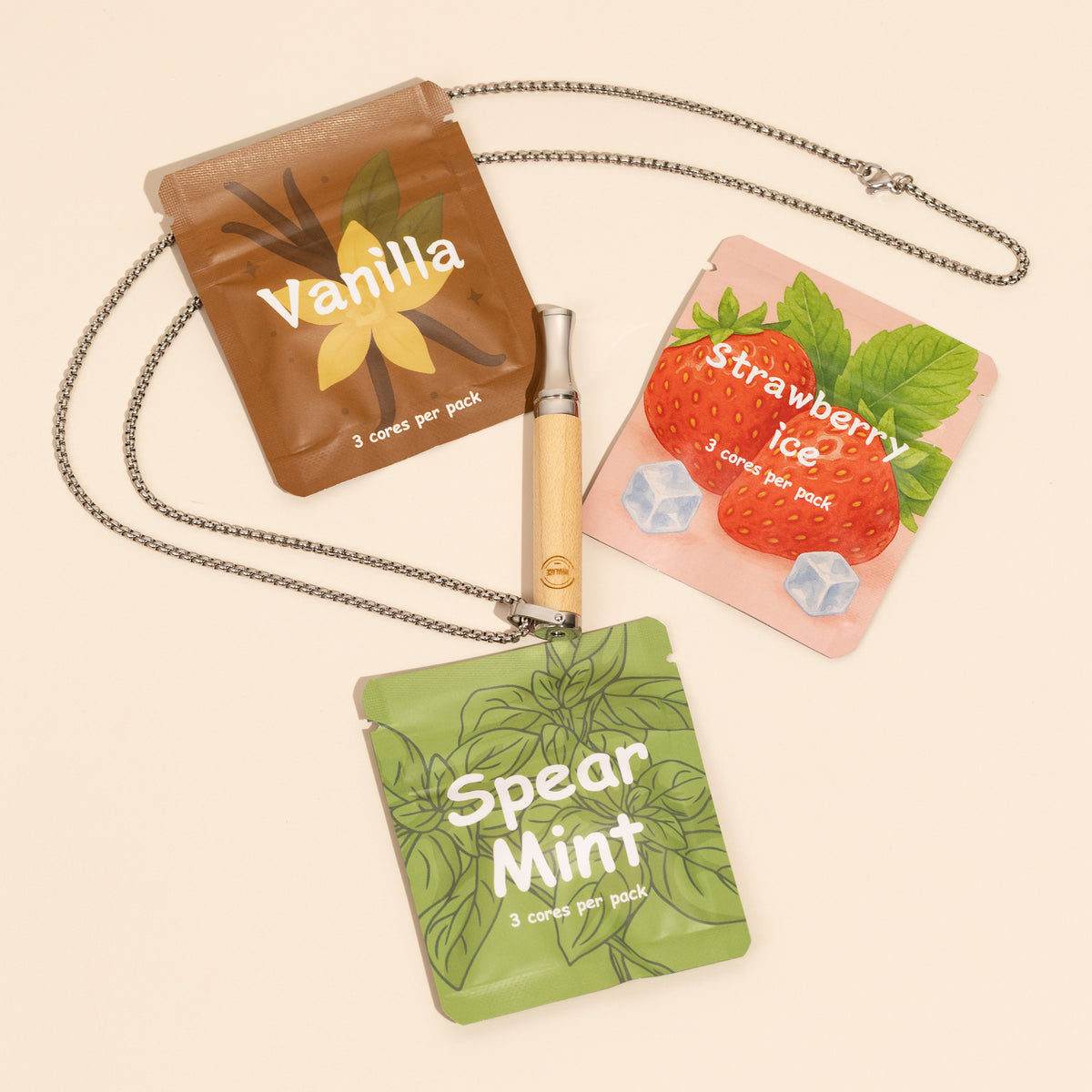
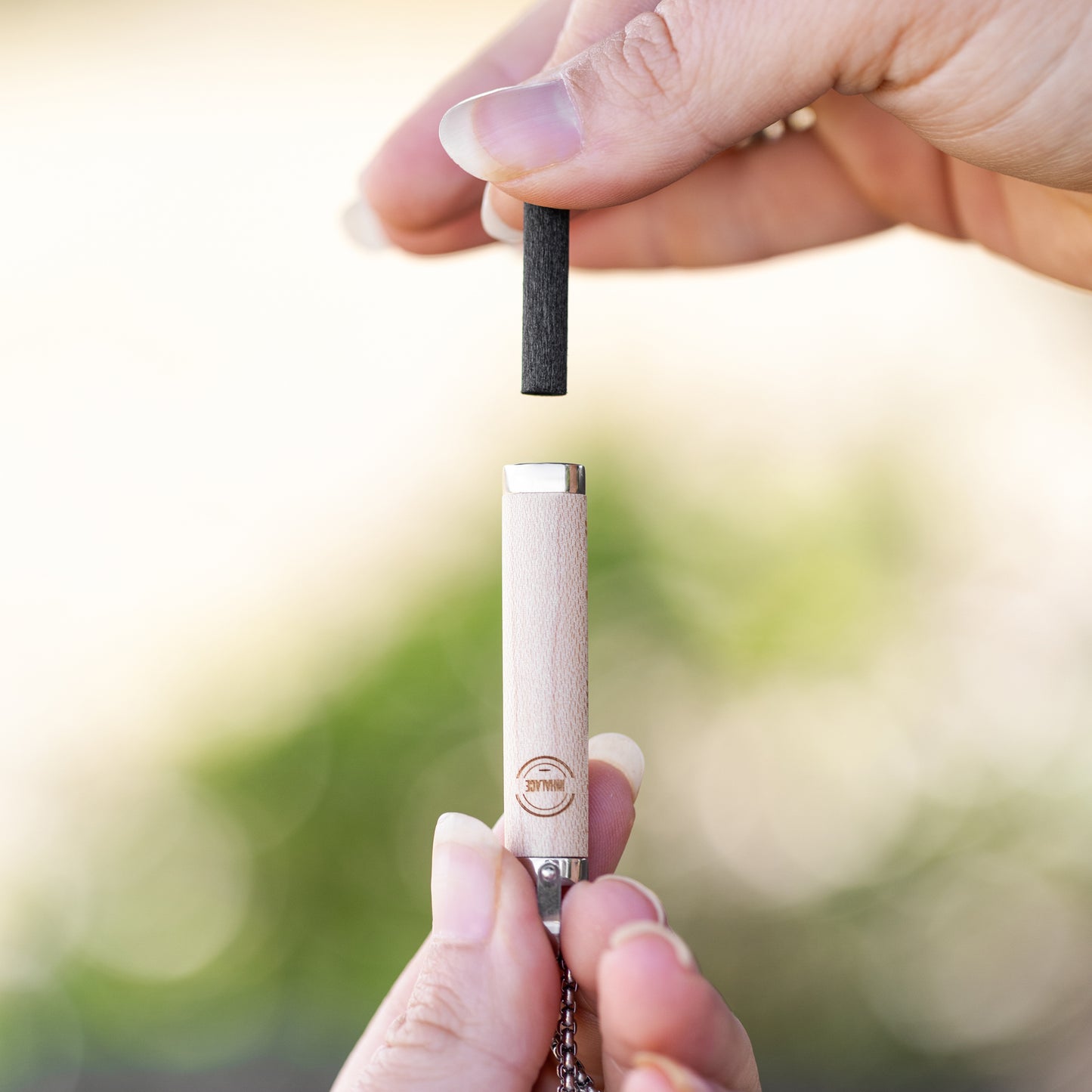
Vaping isn't only nicotine. It's hundreds of daily hand-to-mouth repetitions, deep draws, and micro-breaks, and quitting leaves a hole exactly that shape. Habit research is clear that a competing routine beats willpower alone, and that pure suppression is the weakest strategy (Wood & Neal 2016). Give your hands and breath something to do at each cue from your Step 2 list: a breathing necklace like ours, toothpicks, sugar-free gum, or a water bottle. Whatever keeps the ritual and drops the nicotine. (Yes, we sell one option here. The principle works regardless of which you pick.)
Step 6: Breathe through the craving
Cravings feel permanent and last minutes. Slow breathing with a long exhale is the fastest tool you carry everywhere: in a randomised trial of 96 abstaining smokers, breathing exercises significantly reduced craving strength in the moment (Shahab et al. 2013), and controlled deep breathing reduced craving and irritability during withdrawal (McClernon et al. 2004). A small Stanford trial also found five minutes a day of exhale-emphasised "cyclic sighing" improved mood and lowered resting respiratory rate over a month (Balban et al. 2023). We break down this evidence honestly, including what breathing can't do, in Does straw breathing actually work?
Step 7: Re-engineer your environment
Add friction. Bin the vape, chargers and juice the night before your quit date. Don't keep a "backup." Change the spots where you always vaped: different seat on breaks, phone charging outside the bedroom. Wood & Neal note the most successful tobacco-control measures were the ones that simply made smoking harder to do. Make vaping a mission instead of a reflex, and the reflex fades.
Step 8: Expect wobbles, and plan for them
New routines take anywhere from about 18 days to several months to feel automatic (Lally et al., cited in Wood & Neal 2016). A slip is data, not failure: note the cue that got you, strengthen that spot, carry on. If you slip repeatedly at the same cue, that's the sign to bring in more support: Quitline, your GP, or a mate on the same mission.
Your options, honestly compared
Most people succeed with a combination: support, plus something for the nicotine, plus something for the habit.
| Option | What it tackles | Cost | Worth knowing |
|---|---|---|---|
| Quitline coaching | Motivation, planning, accountability | Free | Has a dedicated quit-vaping programme; about a third of quit-smoking enrollees are smokefree at 4 weeks |
| Nicotine replacement (patch/gum/lozenge) | Nicotine withdrawal | Low-cost via Quitline/GP | Strong evidence for smoking; talk to a pharmacist about dosing for vaping |
| Habit-replacement tools (breathing necklace, gum, toothpicks) | The hand-to-mouth ritual and in-the-moment cravings | $0–$50 one-off | Breathing reduces cravings acutely in trials; not proven as a standalone long-term quit method, so pair it with support |
| Gradual reduction (lower nicotine juice) | Nicotine dose | Ongoing vape spend | Keeps every cue and ritual alive, so it's easy to stall; set a hard end date |
| Cold turkey | Everything at once | Free | Works for some; the first fortnight is hardest, so plan steps 5 to 7 or willpower carries the whole load |
Sources
- Vaping prevalence and trends: findings from the 2024/25 NZ Health Survey. Public Health Communication Centre / ASPIRE Aotearoa, University of Otago, Dec 2025.
- Smoking rates and figures. Health New Zealand, citing NZ Health Survey 2024/25.
- ASH Year 10 Snapshot Survey 2025. Action for Smokefree 2025, Nov 2025 (31,402 students).
- More New Zealanders turning to Quitline for help to quit vaping. Whakarongorau Aotearoa, May 2026.
- Balban et al. 2023, Brief structured respiration practices enhance mood and reduce physiological arousal. Cell Reports Medicine.
- Shahab, Sarkar & West 2013, The acute effects of yogic breathing exercises on craving and withdrawal symptoms in abstaining smokers. Psychopharmacology.
- McClernon, Westman & Rose 2004, The effects of controlled deep breathing on smoking withdrawal symptoms. Addictive Behaviors.
- Wood & Neal 2016, Healthy through habit. Behavioral Science & Policy.
- Disposable vape ban and strict advertising rules begin. RNZ, 17 June 2025.
This guide is general information, not medical advice. For personalised help quitting, talk to your GP, pharmacist, or Quitline on 0800 778 778.