Does straw breathing actually work? The science
Updated 21 July 2026 · Written by the Inhalace team · Every claim below links to a peer-reviewed source.
The short answer: yes. For calming down and getting through a craving in the moment, slow breathing with a long exhale is one of the best-evidenced free tools there is. Randomised trials show breathing exercises significantly reduce nicotine cravings immediately after practice, and a Stanford trial found five minutes a day of exhale-emphasised breathing improved mood and lowered resting breathing rate over a month. What straw breathing is not: a proven standalone way to stay quit long-term. The honest picture, including that limitation, is below.
Why a straw? The mechanism
Breathing out through a narrow opening (a straw, pursed lips, or a tool like the Inhalace) does one thing above all: it stretches your exhalation out longer than your inhalation. That ratio matters. A long, slow exhale is the signal your autonomic nervous system reads as "safe": it engages the parasympathetic ("rest and digest") branch, slowing heart rate and winding down the fight-or-flight arousal that stress and nicotine withdrawal crank up.
This is the same reason counsellors teach straw breathing and pursed-lip breathing for anxiety: the narrow opening does the pacing for you. You don't need to count seconds or remember a technique mid-craving; the physics of the tube slows the breath automatically.
What the studies actually found
1. Slow breathing reduces cravings immediately
In a randomised trial, 96 abstaining smokers were assigned to a yogic breathing exercise or a video control. Right after practising, the breathing group reported significantly weaker urges and cravings (strength of urges p < 0.001) (Shahab, Sarkar & West 2013, Psychopharmacology). The honest caveat from the same study: by 24 hours later the effect had washed out. Breathing is an in-the-moment tool you reuse at each craving, not a one-off cure.
2. Deep breathing eases withdrawal symptoms
An earlier controlled study of dependent smokers found that controlled deep breathing during abstinence "significantly reduced smoking withdrawal symptoms, including craving for cigarettes and negative affect", the tense, irritable feeling quitters know well (McClernon, Westman & Rose 2004, Addictive Behaviors).
3. Exhale-emphasised breathing beat meditation for mood in a Stanford trial
In a small randomised trial at Stanford (about 100 participants analysed), people practised five minutes a day for a month of either mindfulness meditation or one of three breathing techniques. The standout was cyclic sighing, the exhale-emphasised technique: it produced a significantly larger improvement in positive mood than meditation and a greater drop in resting respiratory rate (Balban et al. 2023, Cell Reports Medicine). Long exhales, done briefly but daily, changed how people felt at baseline, not just during practice.
4. The habit half: substitution beats suppression
Habit researchers Wood & Neal describe habits as "context–response associations in memory" and are blunt that white-knuckle suppression is the weakest way to break one; the effective strategies are disrupting cues, re-engineering your environment, and giving the cue a competing response (Wood & Neal 2016, Behavioral Science & Policy). A breathing tool worn where the vape used to live is exactly that: same cue, same hand-to-mouth motion, different routine, genuinely calming reward.
What straw breathing won't do
- It doesn't remove nicotine withdrawal. If you've been on high-nicotine vapes, talk to your GP, pharmacist or Quitline (0800 778 778) about nicotine replacement alongside it.
- It isn't a proven standalone long-term quit method. The craving relief in trials is acute (minutes to hours). The long-term value comes from using it at every craving while the habit loop rewires, ideally with support.
- The studies above are on smoking, not vaping. No vaping-specific breathing RCT exists yet. Nicotine craving is the common mechanism, but we'd rather tell you the evidence base precisely than oversell it.
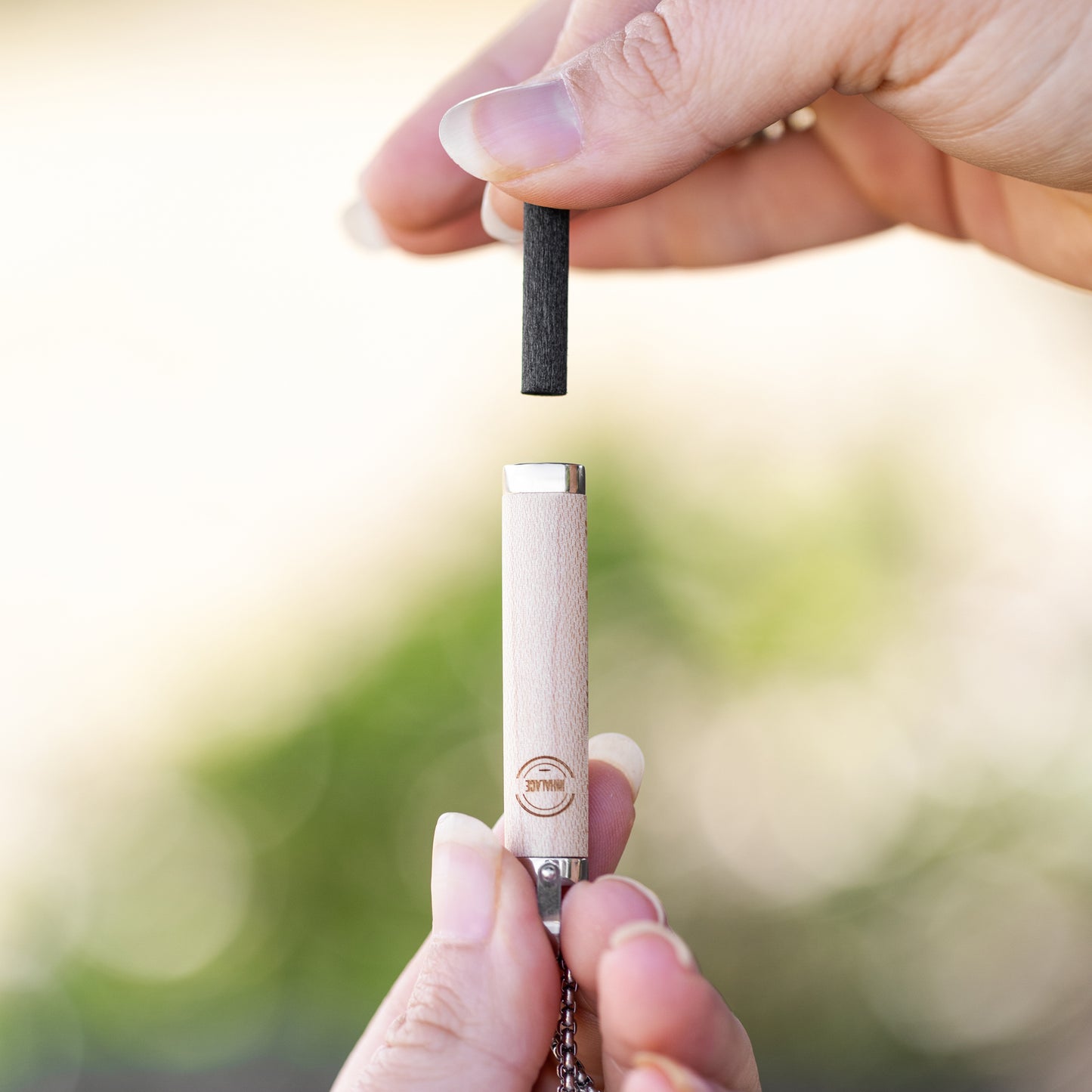
That's also our honest pitch for the Inhalace itself: it packages the two things that do have evidence (paced long-exhale breathing and habit substitution) into something you wear where the vape used to be. It replaces the habit; you, with support, beat the nicotine. Read the full plan in How to quit vaping in NZ.